• If global peace is to be achieved in the twenty-first century, then virulent nationalistic beliefs—as opposed to legitimate patriotic sentiments—need to be supplanted by a broader devotion to all humankind.

  • Today, the central task of building peace entails focusing on shared principles rather than purely pragmatic measures such as physical security or economic development. Peoples from all cultures can agree that the path to peace originates as an internal moral stance informed by transcendent and timeless values, such as the duty to love our neighbors.

  • A worldview approach rejects conflict and contention, views humanity as a single community rich in its diversity, upholds universal values, seeks knowledge from diverse sources, and promotes a form of unity that does not rely on the threat posed by a common enemy.

  • Global peace will only become a meaningful possibility when gender equality is achieved. The parity of women and men, of girls and boys, in all walks of life will bring about the ethical and cognitive prerequisites to peace-building.

  • A major barrier to achieving a global society defined by progress, stability, and peace is the increasing concentration of wealth amid widespread and crushing poverty. Solutions to this fundamental problem must be forged in the realms of the spirit, ethics, and national and international policy.

  • The twin scourges of racism and prejudice fundamentally undermine prospects for a more peaceful world by denying opportunities to their victims, debasing their enablers, and impeding mutually beneficial cooperation among diverse individuals and communities at the local, national, and international levels.

  • Over the course of history, disagreements over matters of faith and religious practice have repeatedly provoked or helped sustain violent conflict. In the twenty-first century, this pattern must be broken through a sustained process of intra- and inter-faith dialogue and peacemaking.

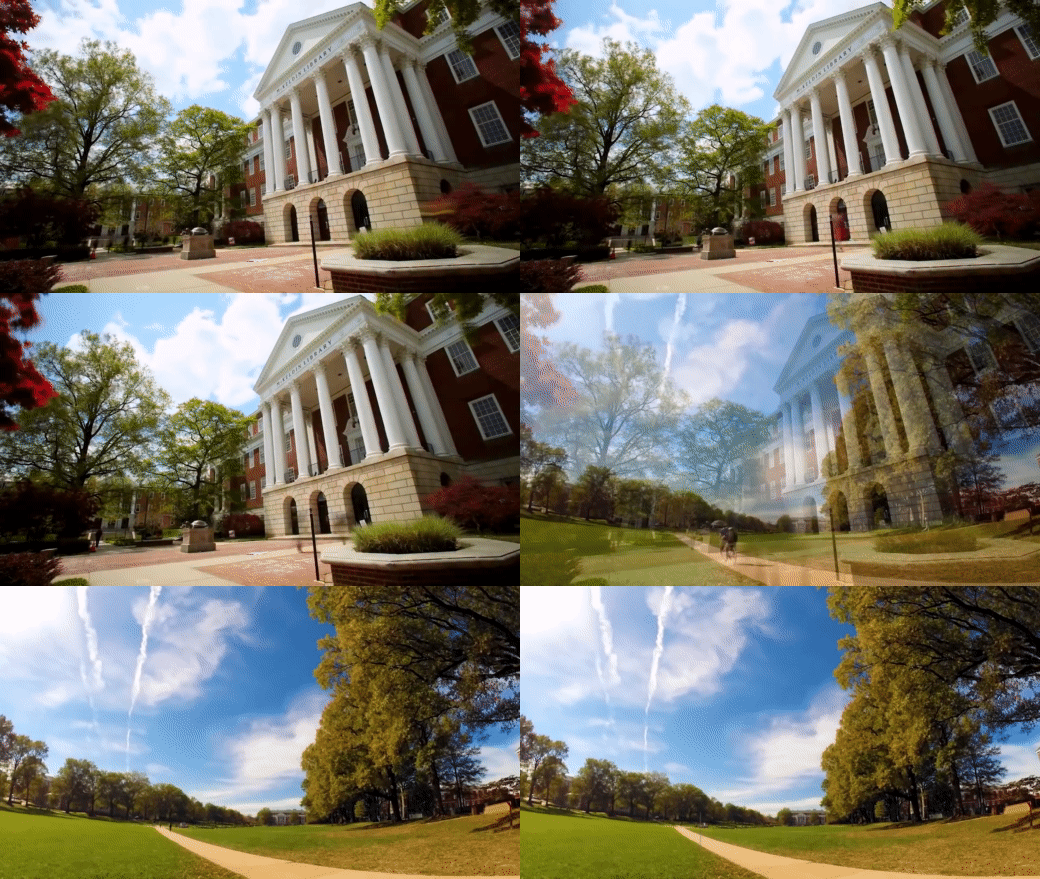
  • The University of Maryland, College Park.

  • In the twentieth century, the principle that everyone enjoys the right to a basic education helped transform national societies. Today, as a step toward to the creation of a peaceful global society, the idea of world citizenship should be taught at all levels of education.

  • Ingrained habits of gender bias undermine human progress by denying equal opportunity and participation to fully half of the human community. Furthermore, discrimination against women and girls warps society’s progress by inculcating negative tendencies and behaviors among men that are expressed on all levels, from family life up to and including the highest levels of world politics.

The Bahá’í Chair for World Peace at the University of Maryland is an endowed academic program that advances interdisciplinary examination and discourse on global peace. While drawing certain initial insights from religion, the program aims to develop a sound scientific basis for knowledge and strategies that lead to the creation of a better world.

The Bahá'í Chair for World Peace
1114 Chincoteague Hall
University of Maryland
College Park, MD 20742

© Copyright 2013 University of Maryland

Facebook   TwitterFlickr  YouTube
BSOS

Phone 301-314-7714

Fax 301-314-9256

Email bcwp@umd.edu